With this tool, we aim to digitally track the maintenance of the vehicles we service, while measuring and recording technical data to objectively assess the wear of components subject to frequent replacement—primarily brake pads, brake discs, and tires.
To approach this data objectively, it is necessary for the technician to spend a few minutes collecting this information during each vehicle visit.
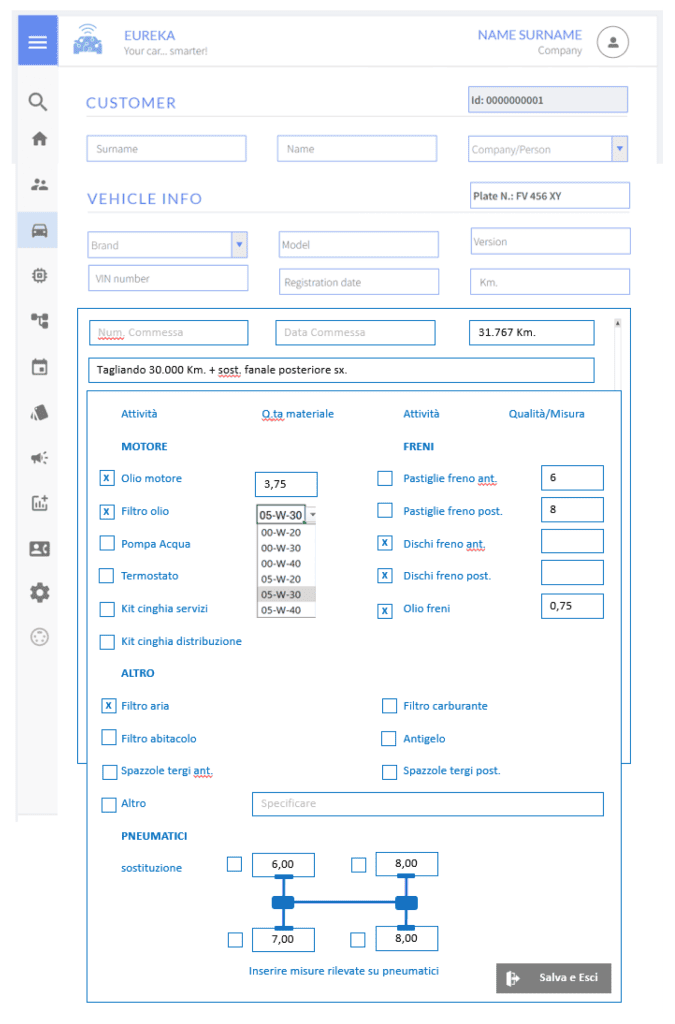
This approach offers benefits for both the end customer and the repairer. The customer will be able to keep a record of every intervention performed and easily attach photographic documents (such as a copy of the repair invoice).
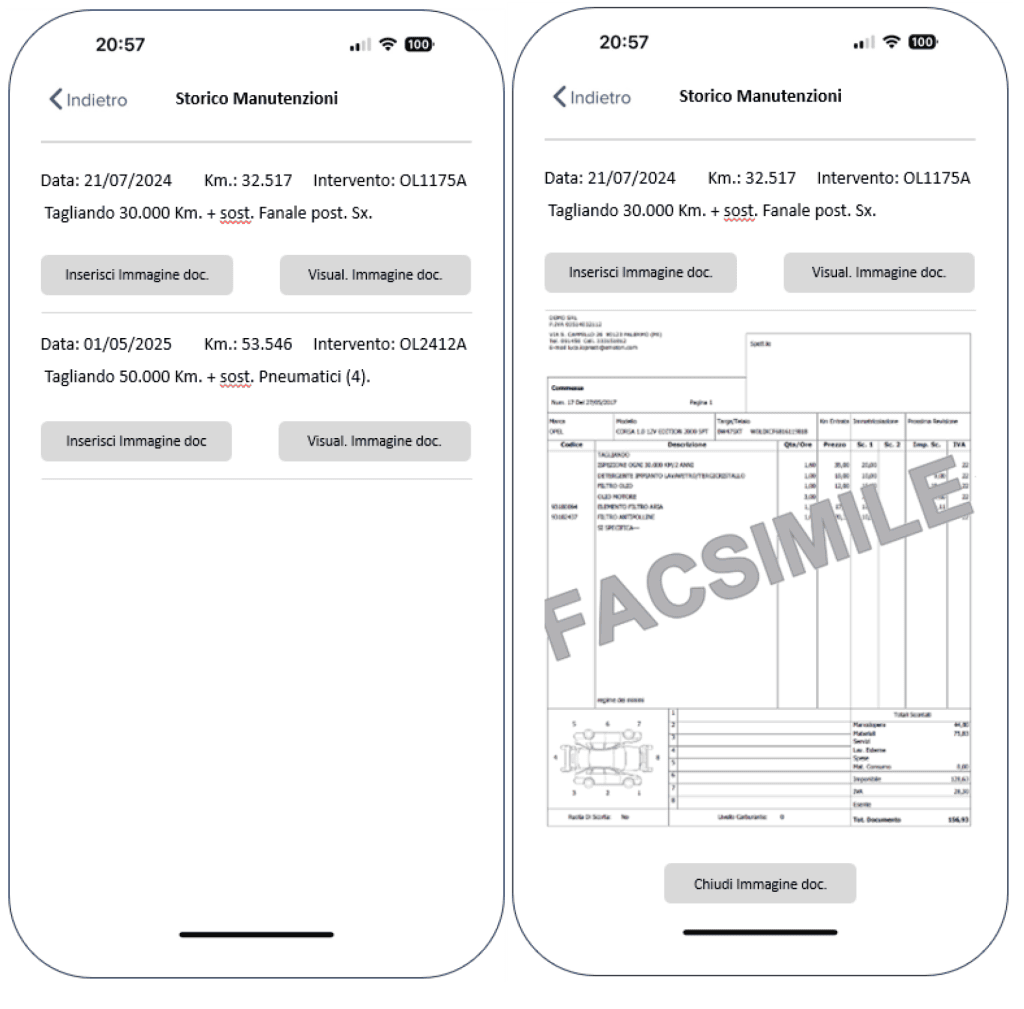
The dealer, for their part, will be able to monitor vehicle wear and create specific “calls to action” to anticipate maintenance needs or consumable replacements before the situation becomes urgent. This ensures better workshop schedule management without generating “URGENT CASES” that would disrupt activity planning.
Thanks to precise benchmarks (for example, the average thickness of a new front brake pad is 10.5 mm, while at 1.5 mm the brake risks being damaged), it is possible to forecast when brakes and tires will reach the end of their lifespan.
For example, if on 11/10/2021, I replace the front brake pads and the vehicle shows 23,987 km, when I see it again on 11/06/2022 at 37,865 km for service, I can measure the thickness of the pads and record the measured value (e.g., 7 mm). Currently, the technician simply judges that the thickness is sufficient and keeps that information to themselves (a subjective evaluation that is not necessarily shared).
Recording this data is significant: it shows that the customer consumed 3 mm of front brake lining in 12 months and 13,878 km. If their driving style remains constant (which is likely), they will reach approximately 55,708 km around February 2024. At that mileage, the front pad thickness will be 1.5 mm.
It will therefore be enough to offer them a free brake system check in early January 2024 to hit the target with a good approximation. This free operation will naturally turn into a paid intervention, providing the opportunity to see the customer again or detect that, in addition to the pads, the discs might need replacing, an oil leak checked, etc.
This interface will be available soon and integrates with the upcoming EUREKA PREDICT module.
Discover what EUREKA can do for you.